Every entertainment campaign wants awareness. But awareness alone does not drive turnout, longevity, or cultural impact, especially with US Hispanic, Black, and AAPI audiences.
What consistently moves these audiences is validation.
Across theatrical and streaming campaigns, we see that multicultural audiences are not passive consumers waiting to discover content. They are active decision-makers who rely on trust, community signals, and cultural credibility to determine what is worth showing up for and what is worth recommending.
Understanding this distinction fundamentally changes how campaigns perform.
The “Awareness Is Enough” Assumption
Campaigns often assume that once awareness is achieved, audiences will follow. For multicultural audiences, awareness without validation frequently stalls.
This tends to show up as strong visibility but uneven turnout, opening weekend interest without sustained momentum, positive sentiment that does not translate into action, and campaigns that feel present but fail to move through communities.
The issue is rarely scale. It’s confidence.
What Validation Actually Looks Like
Validation is the moment when an audience feels confident saying, “This is for us,” and then brings others with them.
For US Hispanic, Black, and AAPI audiences, validation is built through trusted community voices and cultural connectors, inclusion early in the campaign lifecycle rather than late-stage translation, signals of quality, respect, and authenticity, and shared experiences that encourage participation and advocacy.
Validation is what turns interest into momentum.
Where Validation Shows Up in Multicultural Campaigns
Community Drives Momentum, Not Messaging
Multicultural audiences place high value on peer recommendation, family networks, and cultural trust. Campaigns that activate credible ecosystems early create organic word of mouth that cannot be replicated through volume alone.
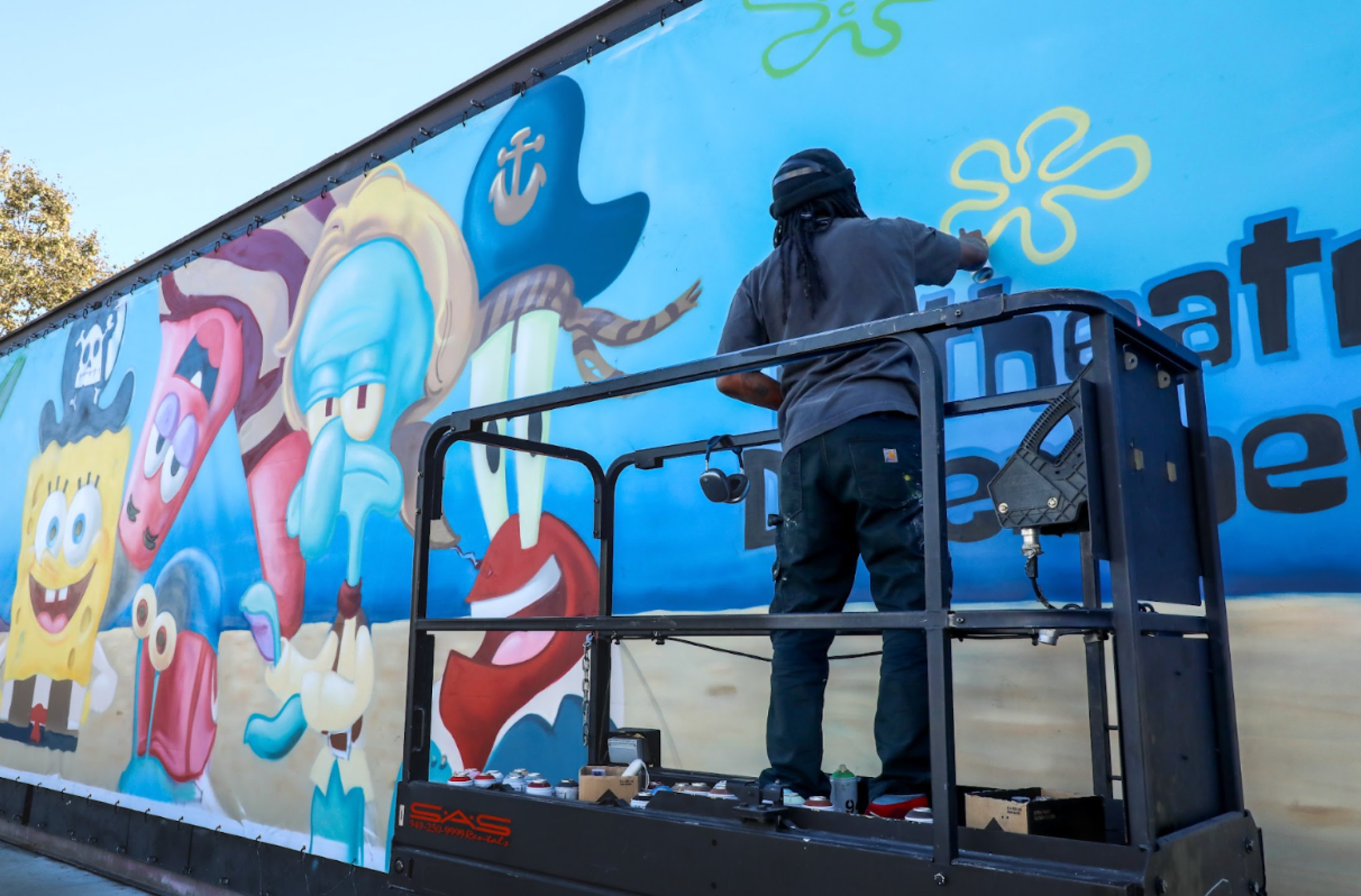
A clear example of this dynamic was seen with The SpongeBob Movie: Search for SquarePants, where alignment with Marathon Clothing functioned as cultural adjacency rather than promotion. Marathon already held deep credibility within the community. By showing up together through a community-centered holiday toy drive and advance screening, the film earned participation instead of pushing messaging.
The experience was further grounded through the involvement of acclaimed multicultural muralist Blue the Great, who created an original SpongeBob mural on site, reinforcing cultural authorship and signaling respect beyond surface-level branding.
More than 250 families and community members attended, contributing over 350 toys in support of a trusted local nonprofit. Social conversation and turnout were driven organically by community partners, reinforcing trust rather than awareness alone.
That participation became validation. Validation became advocacy.
This principle is especially important for family and four-quadrant IP, where shared viewing matters, and for genre titles, where trust influences timing and turnout.
Women Are Often the First Validators
Across US Hispanic, Black, and AAPI households, women frequently act as cultural programmers. They influence what is watched, when it is watched, and who joins the experience.
This dynamic was especially evident in the US Hispanic campaign for The Housemaid. Hispanic Latino audiences represented approximately 27 percent of opening weekend turnout, with women driving early conversation, urgency, and group attendance. That early validation helped establish confidence heading into release and reinforced how quickly momentum builds when women feel culturally aligned with the story.
When campaigns resonate with women culturally, not just demographically, they unlock repeat viewing, group attendance, and broader community endorsement. This behavior cuts across genres and platforms.
Credibility Signals Build Confidence
Multicultural audiences pay attention to signals of quality and respect. Cultural relevance, trusted voices, and credible positioning all help audiences decide what is worth their time and what they feel proud to recommend.
Validation does not require awards recognition. It requires confidence.
Cultural Access vs Cultural Translation
One of the most consistent performance indicators we see is the difference between translating a campaign and building cultural access from the start.
Translation informs. Cultural access activates.
When campaigns are designed with cultural insight, tone, humor, and community understanding at the core, validation happens naturally. When they are added late, audiences recognize it immediately.
Multicultural audiences are highly perceptive. They know when they are an afterthought.
If awareness is about reach, validation is about trust.
Campaigns that succeed with multicultural audiences prioritize early inclusion, respect community dynamics, build credibility before amplification, and treat audiences as partners, not targets.
When validation is present, awareness converts. When it is missing, no amount of volume can replace it.
At AGM, our most effective multicultural work is grounded in this understanding. We are not introducing content to these audiences. We are earning their confidence.
That is where momentum begins.