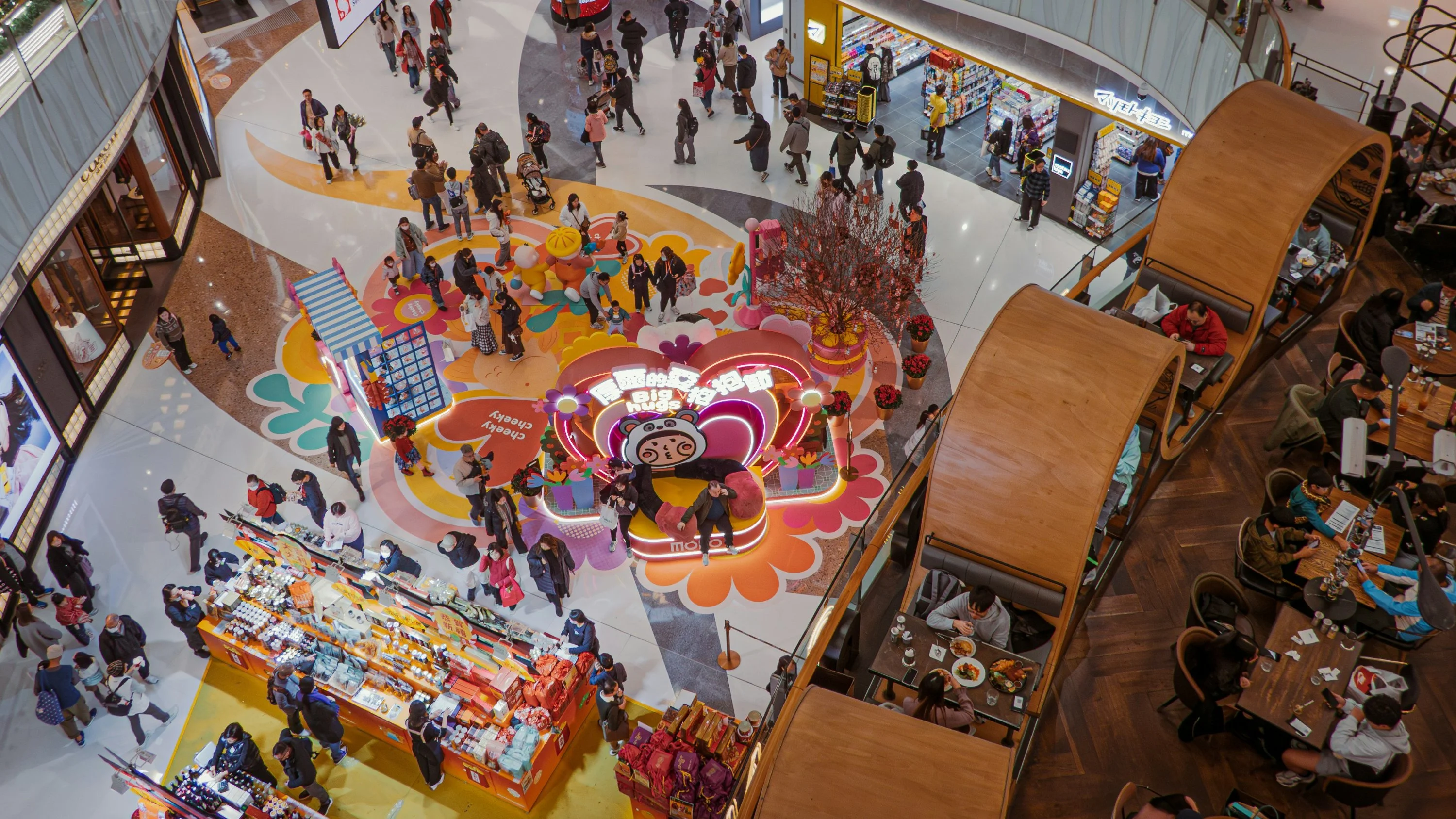
If you’re building, expanding or relaunching a location-based entertainment (LBE) concept, you’ve likely felt the shift: the competition isn’t just other attractions anymore. It’s everywhere people could go: restaurants, live events, fitness, shopping districts and the couch.
The implication is simple: success is less about building the coolest experience and more about building the most returnable one.
That matters because LBE doesn’t get a long grace period. Acquisition costs don’t wait, novelty fades fast and in most markets you’re competing with habits, not just venues. The winners aren’t the concepts that create the most initial excitement. They’re the ones that turn a first visit into a second and a second into a pattern.
From one-time attraction to repeat destination
Opening weekend demand is no longer the bar. The bar is: repeat visitation, repeat spend and repeat advocacy.
That’s the difference between:
An attraction: a single “I went” moment
And…
A destination: a place people return to, bring friends to and plan around
Destinations aren’t only marketed differently. They’re built on a model that turns a visit into momentum because returnability isn’t a creative note, it’s a business design choice. The strategic shift is that LBE is increasingly being judged the way the best “third places” are judged: not by whether people like it but by whether it becomes the obvious answer to “What should we do tonight?”
What repeatable LBE rewards (and what it ignores)
When teams ask why a competitor is “winning” locally, the answer is rarely one thing. It’s a stack of choices that reduces friction and increases the odds someone comes back.
Clarity beats cleverness.
The strongest concepts are easy to understand fast: what it is, who it’s for, what you do, and why it’s worth the time. If the premise can’t be explained in a sentence, the customer has to do too much work to decide. In LBE, decision friction is fatal because you’re not competing for interest, you’re competing for plans.
Programming beats stunts.
Sustainable demand comes from a rhythm: seasonal refreshes, limited-time moments, community beats, and partner integrations that give people new reasons to return. You don’t need a total redesign every quarter. You need new chapters and clear reasons for repeat audiences to feel like they’re getting something fresh.
Shareability is designed.
People don’t share the venue. They share moments. The best experiences build those moments into the flow: reveal points, photo punctuation, interactive beats, and “I need to show you this” moments that don’t require guests to break immersion to capture content.
Consistency beats spectacle.
Many concepts over-invest in the wow and under-invest in the smooth. Great runs are built on reliability: predictable throughput, friendly staff, coherent wayfinding, and a purchase journey that doesn’t feel like work.
Common thread: returnable concepts reduce uncertainty. They make it easy to choose, easy to plan, and easy to describe to someone else.
Why “a great experience” can still lose
One of the most common failure modes is a concept that’s genuinely good, with strong build, strong creative and strong reviews, yet demand softens after the launch window.
A venue can be “great” and still struggle if:
- the promise is hard to grasp fast
- the path to purchase creates drop-off
- the post-launch calendar is thin
That’s when teams tend to reach for the obvious lever: more marketing. But if the “system” behind the marketing is weak, increased spend doesn’t fix the underlying constraint. It just buys you more first-timers who don’t convert into advocates or repeat visitors.
This is where repeatability becomes measurable. If your reviews are positive but your return rate is weak, you likely have a programming problem. If intent is high but conversion is low, you likely have a clarity or purchase-path problem. If social chatter exists but doesn’t translate into demand, you likely have a targeting or message-fit problem. And if opening week is strong but weeks 6–12 sag, you likely planned a campaign, not a cadence.
In other words: quality gets you attention. Repeatability keeps you open.
The compounding cost of being “one-and-done”
The opportunity cost here isn’t abstract. If you don’t build return behavior, you end up paying repeatedly for the same customer because you haven’t built the reasons and mechanics for people to come back.
Over time, that compounds in the wrong direction:
- you rely more on bursts, discounts or constant reacquisition
- you become more vulnerable to competition and seasonality
- you struggle to forecast demand, staffing and inventory
- you fail to build first-party audience value (CRM, membership, community)
Destinations compound in the other direction. They benefit from the downstream signals that make every next month easier: word-of-mouth that carries into future weeks, social content that keeps circulating and familiarity that reduces hesitation. Returnability becomes a moat because it reduces the amount of persuasion required to fill the next slot.
And as LBE becomes more common, audiences will compare experiences the way they compare restaurants: not just “Was it good?” but “Is it worth doing again?” The concepts that can answer “yes” repeatedly will own the category mindshare in-market.
How Allied Global Marketing helps LBE brands become third places
Allied Global Marketing helps entertainment and destination brands shift from launch marketing to destination-building by connecting strategy, experience, amplification and measurement into a system that compounds.
We sharpen the promise and target the right demand. That means positioning that lands in a sentence, segmentation grounded in local behavior and a go-to-market plan designed for real market dynamics rather than abstract personas. We pressure-test what makes the experience “plan-worthy” in your specific city and we build the messaging system that makes it easy to say yes.
We build the return engine. Repeatability doesn’t happen accidentally. We help design the programming and content strategy that keeps the concept culturally current and gives people a reason to come back. That includes “moment architecture” inside the experience, creator/community layers that feel authentic and partnership concepts that add real value instead of just logos.
We measure what actually drives sustainability. Attendance is a lagging indicator. We focus on the leading signals that predict a strong run: intent-to-purchase conversion, audience quality, share rate, referral behavior and return indicators so teams can iterate quickly and scale what works instead of guessing.
The LBE opportunity is expanding, but the market is getting tighter and audiences are getting pickier. The winners won’t just build attractions. They’ll build third places, destinations with a reason to return and the operating system to keep getting better.